Ladvien's Lab

Latest Posts

Showing human-only content
The Valdez Mutant -- LPC1114 QFN

Originally posted on www.letsmakerobots.com

Valdez Mutant Files

This is a little board I made in anticipation of Mr. Bdk6's toolchain for the LPC1114.

This toolchain is amazing. Really, if you are wanting to break away from Arduino / AVR, into the ARM chips, Bdk6's toolchain for the LPC1114 is the way to go.

The Valdez Mutant v04

The chip has ROM boot loader. This allows you to program the chip right out of the box. The programming is done over the traditional serial line. Most ARM chips require a JTAG programmer, which are usually a $50 investment. This ...

iOS to µC Using HM-1X in Objective-C

Originally posted on www.letsmakerobots.com

(This node will probably float a bit, have lots of work to do on it. My apologies.)

I'd been wanting to create a bridge between Arduino and iOS for awhile. Not going to lie, not a huge fan of iOS devices, but since my wife won an iPad Mini I've begrudgingly accepted they fill a need. Still, my hacking has orbited robotics and any device I can't connect to a robot frustrate me. Well, a year ago I realized an iPad Mini would connect to an HM-10 , and therefore, robot.

Sadly, the app used ...

FTDI Bitbanging GCC

Originally posted on www.letsmakerobots.com

This is a short note on how to setup a C programming environment for the FTDI chip in bit banging mode, since that's what I had difficulty doing.

There may be easier ways to go about this, but I wanted to use GCC to compile a small C program to control the 8 IOs. The purpose was to write a small command-line program that would reset my LPC1114 before and after programming.

To setup the environment:

1. I downloaded and setup MinGW32 .

2. I then downloaded FTD2XX libraries . This included the ftd2xx.h file ...

LPC1114 -- GCC Toolchain Setup

Originally posted on www.letsmakerobots.com

UPDATE: I tweaked the source and rebuilt lpc21isp to allow for automatic mode switching, bootloader and program, from an FTDI breakout.

A few months ago Bdk6 sent me an LPC1114 ARM processor. Not going to lie, I had little idea how to use the chip.

Bdk6 and his kids had created the Valdez family with the chip:

I tried several IDEs to get the chip going. I wasn't happy with any of them.

LPCXpresso was confusing and intimidating. Since I was trying to learn the chip and a new IDE. Add ...

Kossel Mini Calibration

This is a continuation of my Robot Metallurgy 101 -- AVR Lesson Journal

This is the second part of my Kossel Mini build log

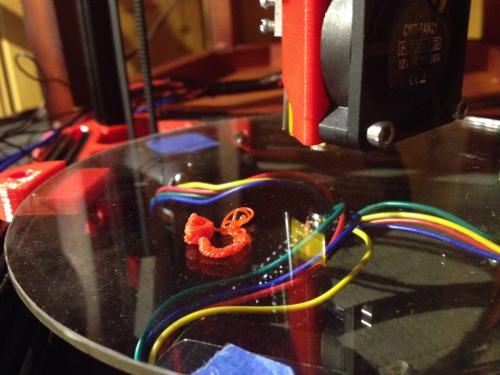
When I made my mind up to build a 3D Printer I knew I was in for a ride. I knew I was going to spend an insane amount of time calibrating the damned thing. Well, my overestimation was nowhere near the truth. I've spent literally days calibrating this damned machine. Mind you, a lot of it was because I refused to "RTFM." But the other part was because there doesn't ...

Kossel Mini Build

Originally posted on www.letsmakerobots.com

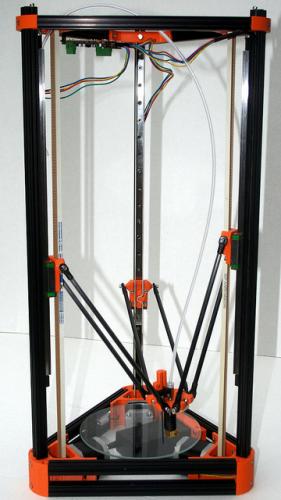
I thought I should give my Kossel a "Robot" page, since Silas asked what the Kossel was, and I told him, "A 3D Printer," to which my precocious son replied, "No, it's a robot."

A lot of the information here is a copy from my build blog, but I've re-thought it's presentation slightly, since there preexist two build guides for the Kossel.

  1. Blokmer's Kossel Mini Build Guide
  2. builda3dprinter's Kossel Build Guide

Both are put together by organizations selling Kossel kits. Blokmer's guide is much more detailed and slow paced. Of course, I purchased my ...

Metallurgy 101 - AVR UART

This is a continuation of my Robot Metallurgy 101 -- AVR Lesson Journal

I started looking through Newbie Hack's tutorials on AVR trying to work up the energy to tackle First LCD Program . Many don't know this, but I despise workings with LCDs. I think it is two parts, one, I live in a world with high-resolution screens embedded in everything from coffee-machines to toilets . Trying to settle with an old school LCD doesn't cut it for me. Furthermore, wiring a non-serial interface LCD is a ever loving pain.

But looking at the rest of the Newbie Hack ...

Metallurgy 101 - AVR PWM

Originally posted on www.letsmakerobots.com

This is a continuation of my Robot Metallurgy 101 Lesson Journal .

After I was able to get my motors moving using the SN754410 I became a little obessessed with understanding AVR PWM architecture. There are several tutorials that helped me a lot:

  1. Newbie Hack's "Intro to PWM."
  2. Newbie Hack's "Control a Servo with PWM."
  3. humanHardDrive's " PWM "
  4. maxEmbedded's " AVR Timers -- PWM MODE "

In the end, I ripped maxEmbedded code and got my PB3 LED working in about 10 minutes. Then, I spent the next three evenings reading trying to figure out what maxEmbedded's code was ...

Scarab

Originally posted on www.letsmakerobots.com

UPDATE: August 10th, 2014

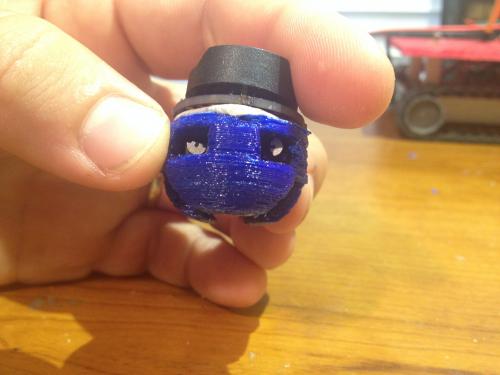
I printed a body and added BLE. I'll explain tomorrow after I get some rest, but the BLE was to allow me to test directed locomotion. I've also done some feature testing (load-sharing, charging circuit, "hunger" ADC), the board is actually a good design. Works well.

The BLE is the HM-11, itty-bitty BLE.

My goal is to test the physical and feature designs with the ATtiny84, and when Mr. Bdk6 releases his toolchain for the LPC1114, switch it as the controlling chip.

This is my version of Yahmez' Baby Bot ...

Advanced(ish) HM-10

Originally posted on www.letsmakerobots.com

Here are some random notes on working with the HM-10.

  1. Working RX/TX LEDs
  2. How upgrade the HM-10
  3. Pseudo Star-Networking HM-10s

Working RX/TX LEDs

I spent some time trying to find a way to create RX/TX traffic LEDs for the HM-10 breakout. This might be easy for some, but it was a real thinker for me. The HM-10 is TTL, which as it was explained me, means that the line is high while idling and low to represent data. The problem here is the typical LED setup doesn't work. Sadly, this is ...